
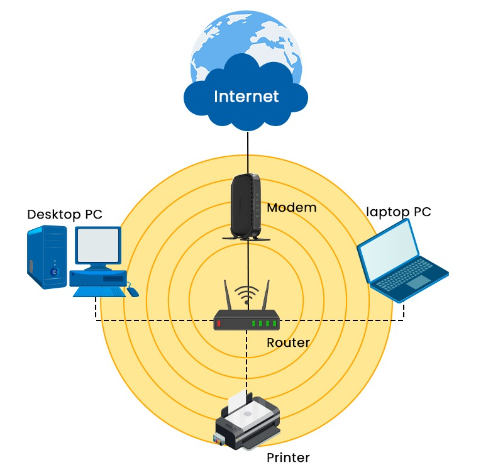
Wireless Local Area Networks (WLANs) have become an integral part of our daily lives, facilitating seamless connectivity and communication in homes, offices, and public spaces. As technology advances, understanding WLANs not only helps in making informed choices about network setups but also enhances our ability to troubleshoot connectivity issues when they arise. This knowledge fosters a more robust online experience in a fast-paced digital world.
What is a Wireless Local Area Network?
A Wireless Local Area Network (WLAN) is a type of local area network that allows devices to connect and communicate wirelessly within a specific area, such as a home or office. Unlike traditional wired networks, WLANs use radio waves to transmit data, enabling users to move freely without losing internet connectivity. This flexibility makes WLANs particularly useful in environments where convenience and portability are paramount.
Key Components of WLAN
Several key components make up a Wireless Local Area Network, including access points (APs), routers, and client devices such as laptops, smartphones, and tablets. Access points serve as the central hub, allowing various devices to connect to the network and communicate with one another. Routers direct traffic between the local network and the internet, while client devices access the network to utilize resources like file sharing and internet browsing, enabling a harmonious digital ecosystem.
Benefits of Wireless Local Area Networks
The primary benefit of WLANs is their convenience; users can connect to the network from virtually anywhere within the coverage area without the constraints of physical cables. This mobility enhances productivity, especially in office settings where collaboration and communication are vital. Additionally, WLAN setups are often easier and less expensive to deploy than their wired counterparts, allowing for flexible network configurations that can adapt to changing needs.
Understanding Wireless Local Area Networks is essential in today’s tech-driven environment. By familiarizing yourself with how WLANs function and their advantages, you can optimize your connectivity and make informed decisions regarding your network. We encourage you to explore more about WLAN technology and consider how it can improve your digital experience.