
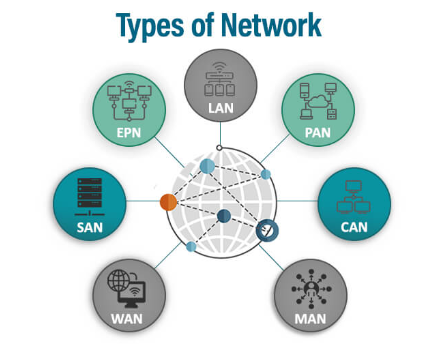
Understanding different types of networks is essential in today’s interconnected world. Whether for personal, educational, or business purposes, recognizing how networks operate can enhance efficiency, security, and communication. This exploration will illuminate the various types of networks and their unique functionalities.
Local Area Network (LAN)
A Local Area Network (LAN) connects computers and devices within a limited geographical area, such as a home, office, or campus. LANs facilitate seamless communication and resource sharing, allowing users to share files, printers, and internet connections easily. Often set up using Ethernet cables or Wi-Fi, LANs are typically faster and more secure than larger networks, making them ideal for small businesses and residential use.
Wide Area Network (WAN)
In contrast to LANs, Wide Area Networks (WANs) span vast geographical areas, often connecting multiple LANs. They are essential for businesses that operate across different locations, enabling data exchange and communication between distant offices. WANs utilize various transmission methods, including leased lines, satellites, and even the internet, which can introduce complexities such as latency and security concerns. As organizations grow and need to communicate globally, understanding WANs becomes increasingly vital.
Wireless Networks
Wireless networks utilize radio waves or infrared signals to connect devices without physical cables, offering flexibility and mobility. Commonly used in homes, businesses, and public spaces, wireless local area networks (WLANs) allow users to connect laptops, smartphones, and tablets from anywhere within the coverage area. However, wireless networks also pose security risks, such as unauthorized access or data interception, making it crucial for users to implement security measures like encryption and strong passwords.
Exploring the different types of networks provides valuable insights into their workings and significance in modern communication. By understanding LANs, WANs, and wireless networks, individuals and organizations can make informed decisions about how to connect and share information effectively. Dive deeper into this topic and equip yourself with the knowledge to optimize your networking experience!