
Understanding networks and their types is crucial in today’s digital age, where connectivity drives efficiency and communication. Whether in personal, educational, or professional settings, knowing how different networks function can enhance productivity and connectivity. This knowledge not only aids in effective collaboration but also helps in troubleshooting common issues.
Types of Networks
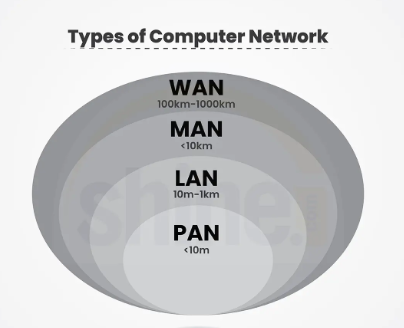
Networks can be categorized into various types based on their scale, architecture, and implementation. The most common types include Local Area Networks (LAN), Wide Area Networks (WAN), and Metropolitan Area Networks (MAN). Each serves different needs: LANs are suitable for small geographical areas, such as homes or offices, facilitating quick and efficient data sharing. In contrast, WANs cover larger distances, connecting multiple LANs and enabling communication over vast areas, making them essential for businesses with multiple locations.
Understanding LANs and WANs
Local Area Networks (LANs) are typically used within a single building or a set of nearby buildings. They provide high-speed data transfer and support a limited number of connected devices. This makes them ideal for settings like schools or small businesses. Wide Area Networks (WANs), however, employ leased telecommunication lines to connect networks over long distances. They usually require more complex infrastructure and are vital for larger organizations needing to integrate branch offices and data centers across cities or countries.
Emerging Networks
As technology evolves, new types of networks, such as Software-Defined Networks (SDN) and Cloud Networks, are gaining popularity. SDNs offer programmability and flexibility by decoupling the network control from its hardware, allowing for more efficient management. Cloud Networks provide scalable resources and services, enabling users to access data and applications remotely over the internet. These emerging networks represent a shift in how organizations manage their IT resources, enhancing adaptability and efficiency in an increasingly distributed work environment.
In conclusion, a solid understanding of network types and their functionalities is invaluable in navigating today’s interconnected landscape. Whether you’re setting up a home office or working in a corporate environment, being informed about networks can lead to better connectivity and efficiency. Explore more about these networks to empower your digital interactions and boost your productivity.