
Understanding the differences between digital and analog communication technologies is essential in today’s tech-driven world. As we rely more on various forms of communication, knowing how these technologies function can enhance our ability to choose the right tools for our needs and improve our daily interactions.
What is Analog Communication?
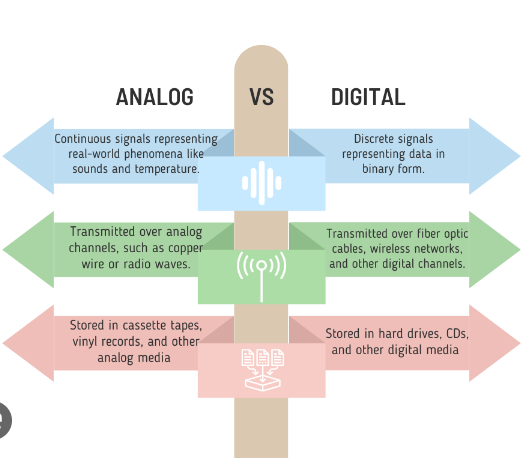
Analog communication transmits information through continuous signals, representing data as physical quantities. This approach is often associated with traditional media like radio and television broadcasts where sound and images are conveyed through waves. Although analog systems can offer high fidelity in sound and image quality, they are also susceptible to noise and interference, which can distort the information being transmitted.
Understanding Digital Communication
Digital communication, on the other hand, involves the transmission of data in discrete signals, converting information into binary code of ones and zeros. This method allows for more efficient storage and transmission, as well as the ability to compress data for quicker transfer. Moreover, digital communication is less prone to interference and can be encrypted for enhanced security, making it a preferred choice for modern applications such as internet communications, mobile devices, and more sophisticated broadcasting technologies.
Comparison of Applications
When considering applications, analog technologies often excel in areas where high fidelity and simplicity are paramount, such as in classic vinyl record playback or traditional AM/FM radio. However, digital communication technologies dominate the current landscape, powering devices and services that require speed, efficiency, and scalability—such as streaming services, online gaming, and social media platforms. The shift towards digital has revolutionized how we interact, allowing for real-time communication across vast distances, making it indispensable in contemporary society.
While both digital and analog communication technologies have their advantages, the trends clearly indicate a move towards digital systems due to their robustness and versatility. As technology continues to evolve, staying informed about these communication methods can empower you to make better decisions in your personal and professional life. Explore further to learn more about the specific technologies that shape our world!