
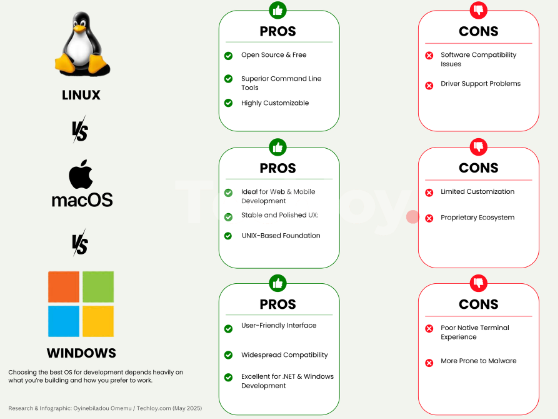
In the world of operating systems, understanding the differences in kernel architecture is crucial for users, developers, and IT professionals alike. Windows, macOS, and Linux all offer unique approaches to managing hardware and system resources, significantly influencing performance, stability, and security.
1. Windows Kernel Architecture
The Windows kernel employs a hybrid architecture that combines aspects of both microkernel and monolithic systems. This allows for higher performance and better compatibility with legacy applications. Its two main components are the kernel itself and the user mode, where applications run. This structure facilitates robust system calls and allows for seamless transitions between user-mode applications and kernel-mode services.
Furthermore, the Windows kernel is designed to manage a wide variety of hardware through a plethora of device drivers. This adaptability means that Windows can work efficiently even on various platforms, from desktops to tablets. Notably, its ability to use Windows Driver Foundation (WDF) helps streamline driver development and improves system stability.
-
- Consider using Windows 10 or Windows 11 to maximize support for newer hardware.
-
- Regularly update your device drivers through Windows Update for optimal performance.
-
- Utilize the Windows Task Manager to analyze system performance and resource allocation.
-
- Familiarize yourself with the Windows Events Viewer for troubleshooting kernel-related issues.
2. macOS Kernel Architecture
macOS utilizes the XNU kernel which stands for “X is Not Unix.” This hybrid kernel combines features of the Mach microkernel and components from BSD Unix. The Mach layer handles low-level tasks like memory management and process scheduling, while BSD provides a rich environment for user applications. This dual approach leads to a stable and efficient operating environment, tailored for Apple hardware.
An intriguing aspect of macOS is its robust security architecture, which is tightly integrated with its kernel design. Features like System Integrity Protection (SIP) safeguard critical system processes from being tampered with, enhancing overall security. Moreover, the use of the HFS+ file system drives efficient disk operations and supports advanced features such as file metadata and journaling.
-
- Stay updated with the latest macOS versions for security and performance enhancements.
-
- Explore Terminal for powerful command-line capabilities that tap directly into the BSD portion of XNU.
-
- Utilize Time Machine for efficient backups, leveraging the macOS kernel’s file system features.
-
- Familiarize yourself with Gatekeeper and SIP to understand macOS security better.
3. Linux Kernel Architecture
The Linux kernel adopts a monolithic structure, meaning that it centralizes most of its services, including device drivers, within the kernel space. This approach can lead to high efficiency and performance, as process communication is faster without the overhead involved in user/kern transitions often seen in microkernels. Linux is renowned for its flexibility and is modifiable, allowing enthusiasts and professionals to tailor it to specific needs.
Additionally, the Linux kernel supports a wide array of file systems and is highly scalable, capable of running on everything from embedded systems to supercomputers. This versatility makes it the go-to choice for servers and enterprise applications. Users can also benefit from a vast ecosystem of distributions, each offering unique kernel configurations and user experiences, such as Ubuntu for ease of use or Arch for customization.
-
- Regularly update your Linux kernel using the package manager for optimal performance.
-
- Choose a Linux distribution that meets your needs, whether it’s for personal use, business, or development.
-
- Explore kernel modules for adding functionalities without recompiling the entire kernel.
-
- Utilize community forums and documentation for troubleshooting and enhancing your Linux experience.
The differences in kernel architecture among Windows, macOS, and Linux highlight how each system approaches hardware management and overall performance. Whether you prefer gaming, creative tasks, or server management, understanding these nuances can significantly affect your experience. Take time to explore these operating systems further, and find which one aligns best with your requirements.